



Charged with a Drug Crime in Maryland?
Maryland drug lawyers for CDS possession, PWID, and distribution. Stop, search, and lab challenges. Free consult 24/7. CDS possession, PWID, and distribution defense statewide. Free consult 24/7.
Results based on internal tracking since 2022; outcomes vary. Not a guarantee.
Verified internally; last updated: Nov 16, 2026.
Request a Free Consultation
Our attorneys answer calls day and night.
Both possession and distribution put a high burden on the State to prove, through scientific evidence, that the substance was in fact a controlled dangerous substance. FrizWoods defends CDS cases statewide, from District Court possession dockets to Circuit Court felony distribution trials. Our Maryland criminal lawyers challenge the stop, the search, the lab work, and the State's theory of who possessed what.
If you were just charged or your loved one is held on a drug case, call (877) 343-1031 or request a free consultation before the next hearing.
Shane Nolan brings substantial drug-case experience to FrizWoods. A former Anne Arundel County prosecutor, he draws on his prosecution background when evaluating the State's evidence and preparing a defense.
Start here: Maryland CDS charges | Possession with intent | How to beat a drug case | How to beat a PWID case | Felony drug charges | Manufacturing CDS | Drug court
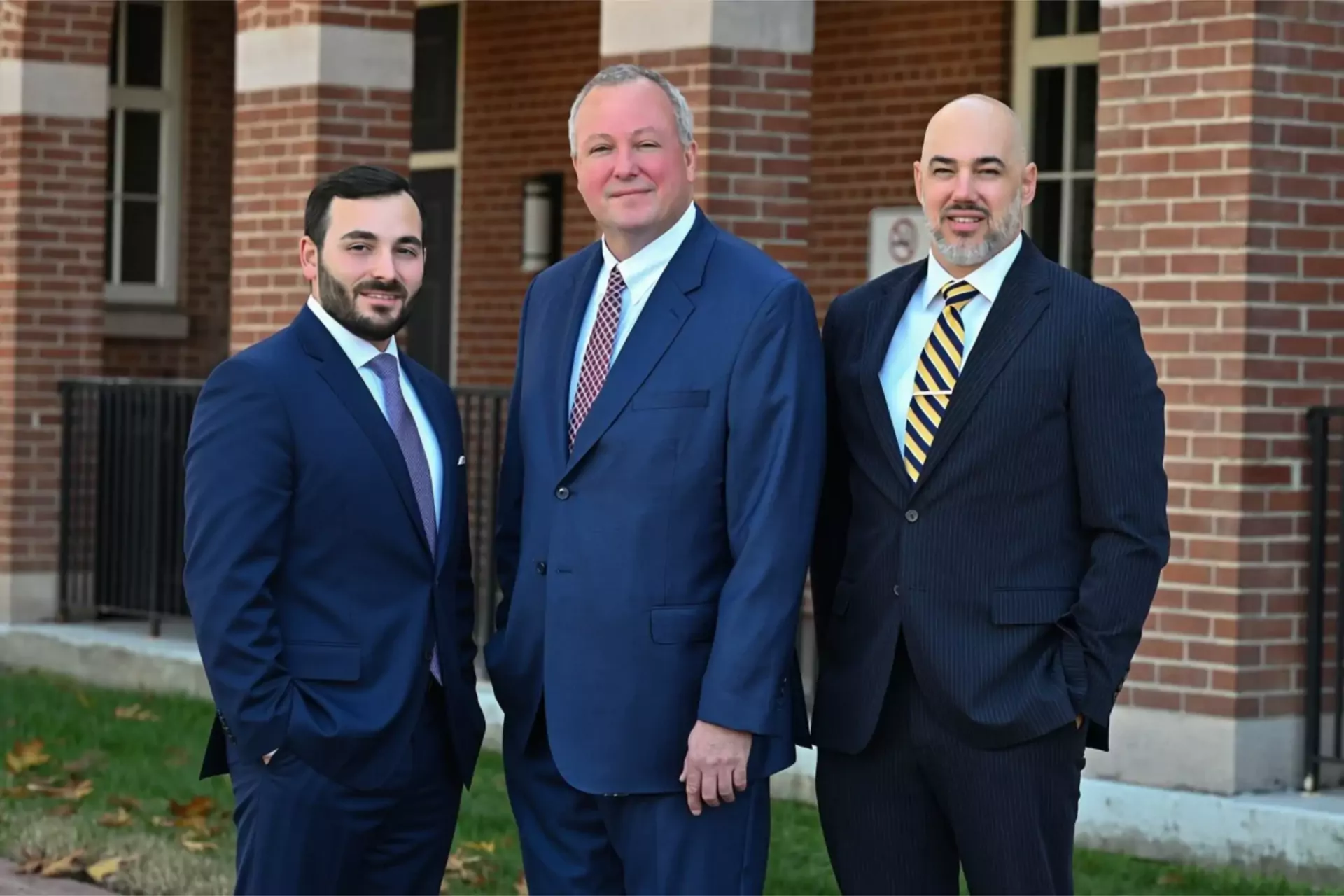
Meet Your Maryland Drug Defense Team

Shane Nolan
Attorney | Former Anne Arundel County Prosecutor
Former Anne Arundel County prosecutor with drug-case experience in District and Circuit Courts.
- Handled drug prosecutions as part of a broader criminal docket.
- Coast Guard service included work with teams that interdicted narcotics.
- Applies prosecution experience to evaluating the State's evidence.

Max Frizalone
Founding Partner | Former Assistant State's Attorney
Defense for possession, distribution, and CDS-related charges.
- Challenges evidence from allegedly unlawful stops, searches, and warrants.
- Evaluates treatment-based resolutions when available.
- Reviews laboratory and chain-of-custody issues.

Luke Woods
Founding Partner | Former Supervising Public Defender
Seasoned drug-crime litigator across District and Circuit Court.
- Motion practice targeting probable cause and informant reliability.
- Evaluates diversion and specialty courts when appropriate.
- Prepares negotiations and sentencing arguments around the case.
Shane Nolan handled drug offenses as part of his Anne Arundel County prosecution docket, and his Coast Guard service included work alongside teams that interdicted narcotics. He uses that prior prosecution perspective to examine searches, witness accounts, recordings, alleged possession, and the State's theory of intent. Max Frizalone is a former Prince George's County Assistant State's Attorney and public defender. Luke Woods is a veteran trial attorney with more than two decades of criminal-defense experience. The firm does not promise that a particular attorney will be assigned to every matter.
Why Choose FrizWoods for Drug Charge Defense
Former prosecutor insight
Max knows how the State builds CDS files, which lab reports matter, and where charging decisions overreach the evidence.
Fourth Amendment focus
Many drug cases involve a roadside stop, warrant, or vehicle search. We examine the basis and scope of the search and seek suppression when the facts and law support it.
Lab and Daubert challenges
The State has to prove the substance is CDS. We challenge qualifications, methods, and whether a sufficient factual basis supports the expert.
PWID overcharge fights
A PWID theory may rely heavily on quantity. We compare that claim with packaging, scales, cash, messages, personal-use evidence, and the complete circumstances.
Firearm enhancement experience
A qualifying firearm charge tied to a drug trafficking crime can bring a mandatory minimum. We connect drug defense with gun charge defense when both are charged.
Diversion and drug court
First offenders and treatment-eligible clients may have paths to PBJ, STET, or drug court. See Maryland drug court.
Statewide court coverage
Representation is available in Prince George's, Anne Arundel, Howard, Montgomery, Baltimore, Calvert, and surrounding counties.
24/7 attorney line
Call (877) 343-1031 after an arrest, a CDS summons, or a no-bond hold on a drug case.
How We Build a Drug Charge Defense
The stop
If the vehicle stop lacked a lawful basis, everything recovered afterward can fall with it. We start with why police pulled you over.
The search
Consent, probable cause, K-9 alerts, and warrant searches each have rules. Improper searches lead to suppression hearings.
Who possessed it
Drugs in a car or home with multiple people raise constructive possession issues. The State has to prove the drugs were yours.
Lab science
GCMS testing and color tests are not automatic. Under Maryland's Daubert standard and Rule 5-702, we challenge the expert and the method.
Intent to distribute
Quantity alone is not the whole story. Packaging, scales, cash, messages, and ledgers are the usual PWID proof points we attack.
Enhancements
Large amount, kingpin, fentanyl mix, and firearm nexus enhancements change exposure. We identify which ones the State can actually prove.
Diversion paths
When the facts allow, we pursue PBJ, STET, treatment resolutions, and drug court eligibility.
Trial readiness
District Court bench trials and Circuit Court juries. Prosecutors price offers based on whether a firm will actually try the case.
Maryland CDS Charge Types
"CDS" is the language Maryland uses on nearly every drug charging document. Most cases fall into one of these buckets:
Simple possession
Often written "CDS: Possess-Not Marijuana." Non-cannabis simple possession is ordinarily a misdemeanor under Criminal Law Section 5-601. Cannabis possession may fall within an adult personal-use allowance, a civil tier, or a misdemeanor tier. See CDS charges.
Possession with intent (PWID)
Written "CDS: Poss W/I Dist." The State may rely on quantity, packaging, scales, cash, messages, and other circumstances. Cannabis PWID is a misdemeanor; other PWID charges are generally felonies. See possession with intent.
Distribution
Written "CDS dist-narc." The State must prove a sale, exchange, transfer, or giveaway, often through an informant or undercover buy.
Felony drug charges
Distribution, most non-cannabis PWID charges, and serious filings such as non-cannabis large-quantity offenses can be felonies. Cannabis PWID and the 50-pound cannabis large-quantity offense are statutory misdemeanor exceptions. See felony drug charges.
Manufacturing CDS
Manufacture and related production charges carry serious exposure. See manufacturing CDS.
Paraphernalia
Commonly listed as "CDS Poss Paraphernalia." The ordinary use or possession-with-intent-to-use offense is a misdemeanor with a first-violation fine up to $500, subject to the statute's prior-history rule. Later qualifying violations can carry jail.
Possession in a jail
Often written "POSS/REC CDS WHILE CONF/DET." This misdemeanor carries up to 3 years and/or a $1,000 fine.
Drugs and firearms
A qualifying Section 5-621 firearm offense during and in relation to a drug trafficking crime can add mandatory time. See CDS with a firearm and firearm drug trafficking.
Drugged driving
CDS cases sometimes overlap with impaired driving investigations. See drugged driving and our DUI defense hub.
Maryland Drug Charge Penalties
Maryland drug penalties depend on the substance, amount, alleged conduct, and qualifying record. These are ordinary statutory maxima, not predictions of the sentence in a particular case.
Simple possession and related misdemeanor baselines
| Charge | Level | Ordinary penalty |
|---|---|---|
| Non-cannabis possession, first conviction | Misdemeanor | Up to 1 year and/or $5,000 |
| Non-cannabis possession, second or third conviction | Misdemeanor | Up to 18 months and/or $5,000 |
| Non-cannabis possession, fourth or subsequent conviction | Misdemeanor | Up to 2 years and/or $5,000 |
| Age 21 or older, up to 1.5 ounces of usable cannabis | Personal-use allowance | No state penalty for possession itself |
| More than 1.5 ounces but no more than 2.5 ounces of usable cannabis | Civil offense | Fine up to $250 |
| More than 2.5 ounces of usable cannabis | Misdemeanor | Up to 6 months and/or $1,000 |
| Person under 21 possessing the personal-use amount of cannabis | Civil offense | Fine up to $100; education, assessment, or treatment may also be ordered |
| Paraphernalia use or possession with intent to use, first qualifying violation | Misdemeanor | Fine up to $500 |
| Same paraphernalia offense, subsequent qualifying violation | Misdemeanor | Up to 1 year and/or $1,000 |
| CDS or other contraband in a place of confinement | Misdemeanor | Up to 3 years and/or $1,000 |
The cannabis limits above apply to usable cannabis. A personal-use amount also includes up to 12 grams of concentrated cannabis or cannabis products containing up to 750 milligrams of delta-9 THC. The civil-use bands exceed those amounts but do not exceed 20 grams of concentrate or 1,250 milligrams of delta-9 THC in products. Amounts above the civil-use limits ordinarily fall under the six-month misdemeanor rule, subject to the separate 50-pound large-quantity provision and other applicable exceptions.
The paraphernalia rows describe the ordinary Section 5-619(c) use or possession-with-intent-to-use offense. A prior conviction under Section 5-619(d)(4) changes the treatment of a first subsection (c) conviction, and other paraphernalia subsections carry different penalties.
These are possession rules. Medical authorization, public smoking, cultivation, impaired driving, and other cannabis conduct have separate rules. See Criminal Law Section 5-101, Section 5-601, Section 5-619, and Section 9-412.
PWID and distribution ordinary maxima
Possession with intent to distribute and an actual or attempted transfer are different allegations. The applicable maximum depends on the substance and penalty section.
| Offense category | Level | Ordinary maximum |
|---|---|---|
| PWID or distribution involving a Schedule I or II narcotic drug under Section 5-608 | Felony | 20 years and/or $15,000 |
| PWID or distribution involving PCP and listed related substances, LSD, or at least 750 grams of MDMA under Section 5-609 | Felony | 20 years and/or $15,000 |
| Other PWID or distribution governed by Section 5-607(a)(1), absent a special provision or enhancement | Felony | 5 years and/or $15,000 |
| Cannabis PWID under Section 5-602(b)(1) | Misdemeanor | 3 years and/or $5,000 |
| Unlawful cannabis distribution under Section 5-602(a)(1) | Felony | 5 years and/or $15,000 |
Do not treat every Schedule I or II substance as a narcotic drug. The 20-year category in Section 5-608 applies to the statute's narrower Schedule I or II narcotic-drug category. See Section 5-602, Section 5-607, Section 5-608, and Section 5-609.
Maryland's adult-sharing exception allows a person age 21 or older to transfer the personal-use amount of cannabis to another person age 21 or older without remuneration. It does not cover a gift tied to a sale, offered with goods or services, or contingent on a reciprocal transaction.
Repeat-offender provisions require more than a raw conviction count
Sections 5-608 and 5-609 provide a maximum of 25 years and/or $25,000 for a qualifying third conviction and 40 years and/or $25,000 for a qualifying fourth or subsequent conviction. Those ranges depend on the particular qualifying convictions, separate occasions, and statutory confinement requirements. A raw offense count is not enough.
Section 5-905 contains a separate subsequent-offense rule, but subsection (e) limits its application when both the earlier and later convictions are under Sections 5-601 through 5-606. In that situation, the person must also have a previous crime-of-violence conviction. Maryland law does not impose a repealed blanket drug mandatory minimum merely because a charge is described as a repeat offense.
Why am I charged with both possession and distribution?
Police may file overlapping counts, but the theories are different. Distribution alleges an actual, constructive, or attempted transfer or exchange. PWID alleges possession plus an intent to distribute, which the State may try to prove through packaging, scales, cash, messages, quantity, and other circumstances even when nobody observed a transfer. For personal-use or civil-use amounts of cannabis, Section 5-602(b)(2) expressly requires other evidence of intent; the quantity alone does not establish cannabis PWID.
Enhanced Penalties and Serious Drug Charges
Large quantities under Criminal Law Section 5-612
Section 5-612 covers manufacturing, distribution, dispensing, or possession at these thresholds. It does not require proof of intent to distribute in every case.
| Substance or form | Section 5-612 threshold |
|---|---|
| Cocaine, a mixture containing a detectable amount of cocaine, or cocaine base/crack | 448 grams or more of the applicable substance or mixture |
| Morphine, opium, or the specified derivatives, salts, or isomers | 28 grams or more |
| Mixture containing a detectable amount of those morphine or opium substances | 28 grams or more of the mixture |
| Fentanyl or a DEA-scheduled structural variation | 5 grams or more |
| Mixture containing a detectable amount of fentanyl or a DEA-scheduled structural variation | 28 grams or more of the mixture |
| LSD | 1,000 dosage units or the equivalent in a mixture |
| PCP in liquid form | 16 ounces or more |
| Mixture containing a detectable amount of PCP | 448 grams or more of the mixture |
| Methamphetamine or a mixture containing a detectable amount of methamphetamine | 448 grams or more of the applicable substance or mixture |
For a non-cannabis violation, Section 5-612 creates a felony with a five-year mandatory minimum, prohibits suspension of that minimum, restricts parole during it subject to the statutory exception, and permits a fine up to $100,000. The section does not state a standalone maximum prison term.
The 50-pound cannabis provision is different. It is a misdemeanor carrying up to 10 years and/or $50,000, and the non-cannabis five-year mandatory minimum does not apply to that exception.
Section 5-614(a) is a separate unauthorized-importation felony with its own lower quantity thresholds and a maximum of 25 years and/or $50,000. Those importation quantities are not the thresholds for Section 5-612 possession.
Fentanyl under Criminal Law Section 5-608.1
Section 5-608.1 applies when a person knowingly violates Section 5-602 with fentanyl or a fentanyl analogue, or with a qualifying heroin and fentanyl mixture. It permits up to 10 additional years, and a sentence imposed under that section must run consecutively to every other sentence. It does not automatically apply to simple possession.
Firearms and drug trafficking
Section 5-621 applies when, during and in relation to a qualifying drug trafficking crime, a person uses, wears, carries, or transports a firearm, or possesses one with the required nexus to that crime. Mere proximity between any drug and a firearm does not automatically establish the offense.
A first violation carries 5 to 20 years with a nonsuspendable five-year mandatory minimum. A subsequent violation carries 10 to 20 years with a nonsuspendable ten-year mandatory minimum and must run consecutively to the drug-trafficking sentence. The statute restricts parole subject to the exception in Correctional Services Section 4-305. Certain listed firearms, machine guns, or firearms equipped with silencers can increase the subsequent mandatory minimum. The section does not expressly require every first-violation sentence to run consecutively.
A prior qualifying drug felony can also support a separate firearm charge under Section 5-622. That felony carries up to 5 years and/or $10,000. Section 5-622 itself does not impose a mandatory minimum or require consecutive sentencing. See our gun charges resources when both drug and firearm counts are filed.
Drug kingpin
The drug-kingpin statute, Section 5-613, requires an organizer, supervisor, financier, or manager acting as a coconspirator, and the conspiracy must involve a quantity listed in Section 5-612.
For a non-cannabis offense, the range is 20 to 40 years without the possibility of parole, with a nonsuspendable 20-year minimum and a possible fine up to $1 million. The cannabis exception involving the statutory quantity is a felony carrying up to 20 years and/or $100,000; the non-cannabis mandatory minimum and parole restriction do not apply to that exception.
Our felony drug charges and manufacturing CDS pages cover these serious filings in more detail.
How Do You Beat a Maryland Drug Case?
Legal defenses in drug cases usually fall into two major areas, plus the facts of possession:
- Fourth Amendment challenges. Challenge the purpose for the stop and the probable cause for the search. Suppression can end the case before trial. See how to beat a drug case.
- Scientific challenges under Maryland's Daubert standard. Maryland adopted a more rigid Daubert standard in Rochkind v. Stevenson, 471 Md. 1 (2020). Rule 5-702 requires the court to decide whether the witness is qualified, whether the testimony is appropriate for the subject, and whether a sufficient factual basis supports it.
- Who possessed the drugs. A car with multiple occupants is a classic constructive possession fight.
- Personal use versus distribution. A larger quantity bought for personal use is not automatically PWID. See how to beat a PWID case.
- Entrapment in trafficking cases. When the State enticed a person to buy or sell drugs they would not have otherwise, entrapment can be on the table.
First-Offender and Diversion Options
A CDS charge does not have to end in a conviction on your record. Depending on the facts and your history, options may include:
- Probation Before Judgment (PBJ): the court accepts a plea but does not enter a conviction
- STET: places the case on an inactive docket and can lead to expungement later
- Drug court and treatment-based resolutions for eligible clients
- Good Samaritan issues when overdose response facts are in play
Which path fits depends on the charge level, your record, and the county. Talk through it before your first court date.
Frequently Asked Questions for a Maryland Drug Lawyer
What does CDS mean on my charging document?
CDS means Controlled Dangerous Substance. It is Maryland's term for any drug the State regulates, and it appears whether you are accused of possession, possession with intent, or distribution. See our CDS charges guide.
Is a CDS charge a felony or a misdemeanor?
It depends on the exact charge. Non-cannabis simple possession is ordinarily a misdemeanor, cannabis possession can be allowed, civil, or misdemeanor conduct depending on the amount and age, and cannabis PWID is a misdemeanor. Unlawful distribution and most non-cannabis PWID charges are felonies. The 50-pound cannabis large-quantity offense is another misdemeanor exception.
Can a first-time drug possession charge stay off my record?
Often, yes. First-time possession cases can be strong candidates for PBJ, a STET, or a treatment-based resolution, though none of these outcomes is automatic.
How do I beat a Maryland drug case?
Most winning defenses attack the stop and search, the lab proof, or who actually possessed the drugs. Start with how to beat a drug case.
Why was I charged with PWID if nobody saw a sale?
PWID does not require an observed transfer. The State may rely on circumstances such as quantity, packaging, scales, cash, and messages. For personal-use or civil-use amounts of cannabis, quantity without other evidence does not establish PWID. See how to beat a PWID case.
What if drugs were found in a car with multiple people?
That is a constructive possession fight. The State has to prove more than presence near the drugs. Your lawyer will press identification, access, and knowledge.
Do guns make a drug case worse?
They can. A first qualifying Section 5-621 firearm offense during and in relation to a drug trafficking crime carries 5 to 20 years with a nonsuspendable five-year minimum. A qualifying prior drug felony can support a separate Section 5-622 firearm charge, but that section has no mandatory minimum. See CDS distribution with a firearm.
Should I talk to police about the drugs?
No. Talk to a lawyer first. Call (877) 343-1031 or use our contact form before you make a statement that ends up in the report.
Maryland Drug Defense by County
We defend drug cases in courts throughout central Maryland:
Prince George's County
Anne Arundel County
Frederick County
Baltimore Area
Calvert & Southern MD
Related Practice Areas
What Clients Say About FrizWoods
Read what our clients have to say about working with FrizWoods:
Related Drug Defense Resources
Charge Guides
Defense Strategy
Guns & Drugs
Related Practice Areas
Our Drug Defense Office Locations
Upper Marlboro Office
14513 Main Street, Ste B, Upper Marlboro, MD 20772
Phone: (301) 720-1917
Get directions on Google Maps
Columbia Office
6304 Woodside Court, Suite 110, Columbia, MD 21046
Phone: (410) 346-9384
Get directions on Google Maps
Severna Park Office
540 Ritchie Hwy Suite 301, Severna Park, MD 21146
Phone: (410) 883-5667
Get directions on Google Maps
Chesapeake Beach Office
9120 Chesapeake Ave #201, North Beach, MD 20714
Phone: (877) 343-1031
All offices available by appointment. Call our 24/7 attorney line at (877) 343-1031 after a CDS arrest or summons.
Talk to a Maryland Drug Crime Lawyer
CDS cases move on the stop, the search, and the lab. Get a plan before your next court date. The first call is free.
Call 24/7: (877) 343-1031
Need Help With a Drug Case Right Now?
If you or a loved one was just charged, our Maryland drug case help page explains next steps and how to protect your record.